


On September 12, 2024, the second meeting of the Ukraine-EU/Euratom Research and Innovation Committee was held. The meeting was devoted to the discussion of the following issues:
• The state of the Ukrainian research system: an overview of key reforms, needs, the impact of Russia’s military aggression on the ecosystem of research and innovation, the role of research in reconstruction, new political initiatives, and the strategic plan of the Ministry of Education and Science of Ukraine until 2027.
• Ukraine’s participation in EU Programmes: status of participation in Horizon Europe and Euratom Programmes, approaches to open science, updates of key EU political Programmes, Ukraine’s progress in their implementation, and news about EU measures to support Ukraine.
During the discussion of Ukraine’s participation in EU Programmes, research was discussed in the directions of the Horizon Europe Programme and the Euratom Programme complementary to it. In the session dedicated to the Euratom Programme, reports were made by Anatolii Zagorodnyi – President of the National Academy of Sciences, and Mykola Dzyubynskyi – representative of the European Commission, directorate for research and innovation in the direction of Euratom.
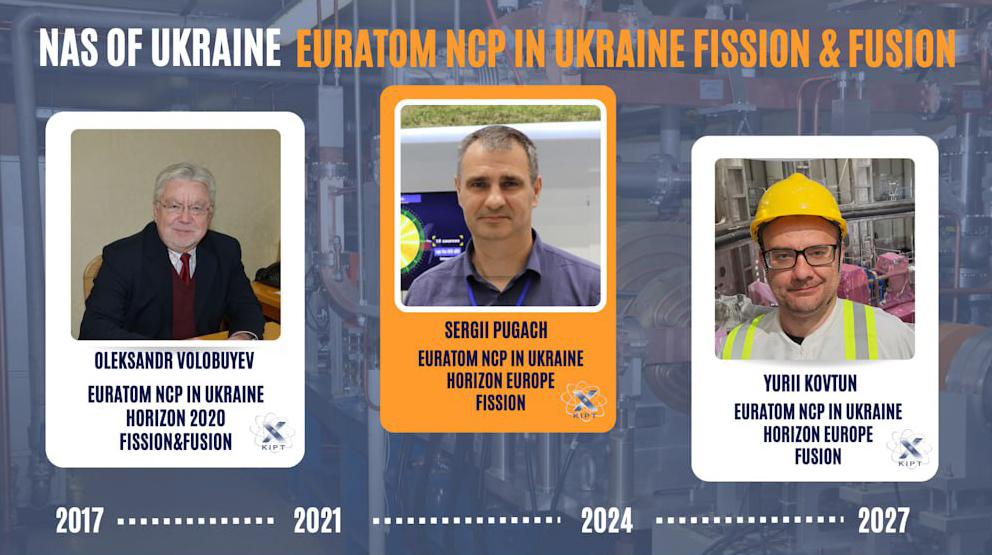
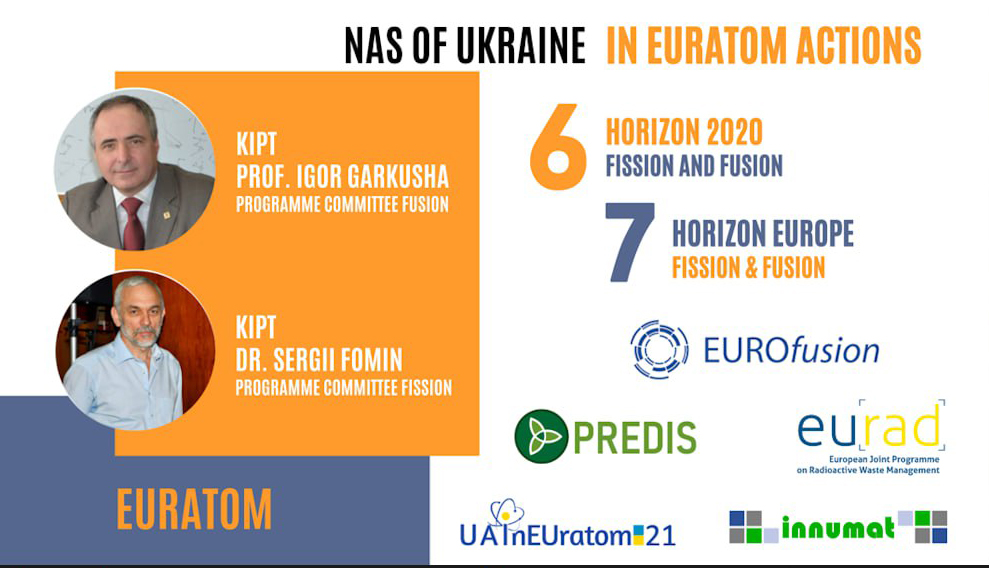
Anatoliy Zahorodniy spoke about the general statistics of the participation of the institutions of the National Academy of Sciences of Ukraine in the Horizon Europe Framework Programme and dwelled in more detail on the involvement of the National Academy of Sciences of Ukraine in the Euratom Programme. Institutions of the National Academy of Sciences of Ukraine participate in 7 Euratom projects under the Euratom Work Programme 2021-2025. Scientists of the National Scientific Center “Kharkiv Institute of Physics and Technology” of the National Academy of Sciences of Ukraine represent Ukraine in the Euratom Programme Committee in the fields of nuclear fission and thermonuclear fusion. This year, the Ministry of Education and Science of Ukraine formed a Ukrainian network of National Contact Points (NCPs) under the Horizon Europe and Euratom Programmes. Two NCPs of Ukraine in the direction of Euratom continued their work at NSC KIPT (NCP Euratom fission, NCP Euratom fusion). Anatoly Hlibovych noted that despite the large number of destructions, scientists continue to contribute to joint European research, the EUROfusion project and the EURAD-2 project were cited as of successful examples.
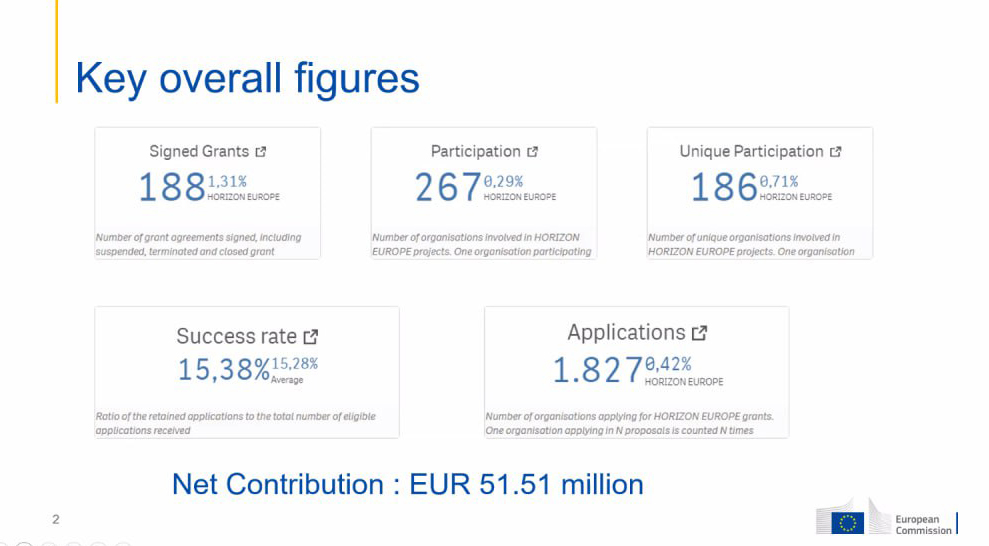
Mykola Dzyubynskyi provided information on the general characteristics of the current Programme and talked about the next Euratom Work Programme 2026-2027, which will complete the cycle of the Horizon Europe 2021-2027 Programme. He devoted part of the report to Ukraine’s participation in the Euratom Work Programme 2021-2025. In total, for the Euratom Work Programme 2021-2025, Ukrainian institutions participate in 19 projects. 18 projects in the field of fission, in which 11 Ukrainian institutions are involved, excluding affiliated organizations, and which have a total of 30 shares in these projects. 1 project is implemented in the direction of fusion, which is carried out by the National Center of KIPT together with 6 affiliated parties. The total indicative contribution from the EU for all projects is EUR 4,868 (fission) and EUR 2,418 (fusion).
In general, Ukrainian scientists actively participate in EU Horizon Europe and Euratom competitions and projects, exceeding the participation rates in the previous cycle of the EU Horizon 2020 Framework Programme.


