


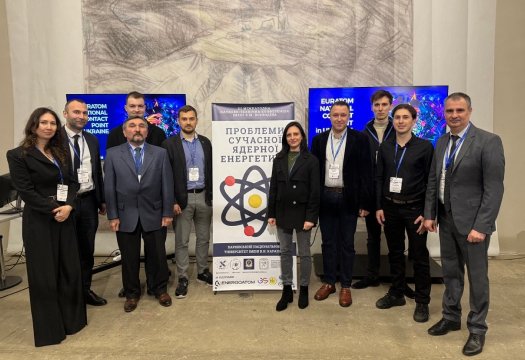

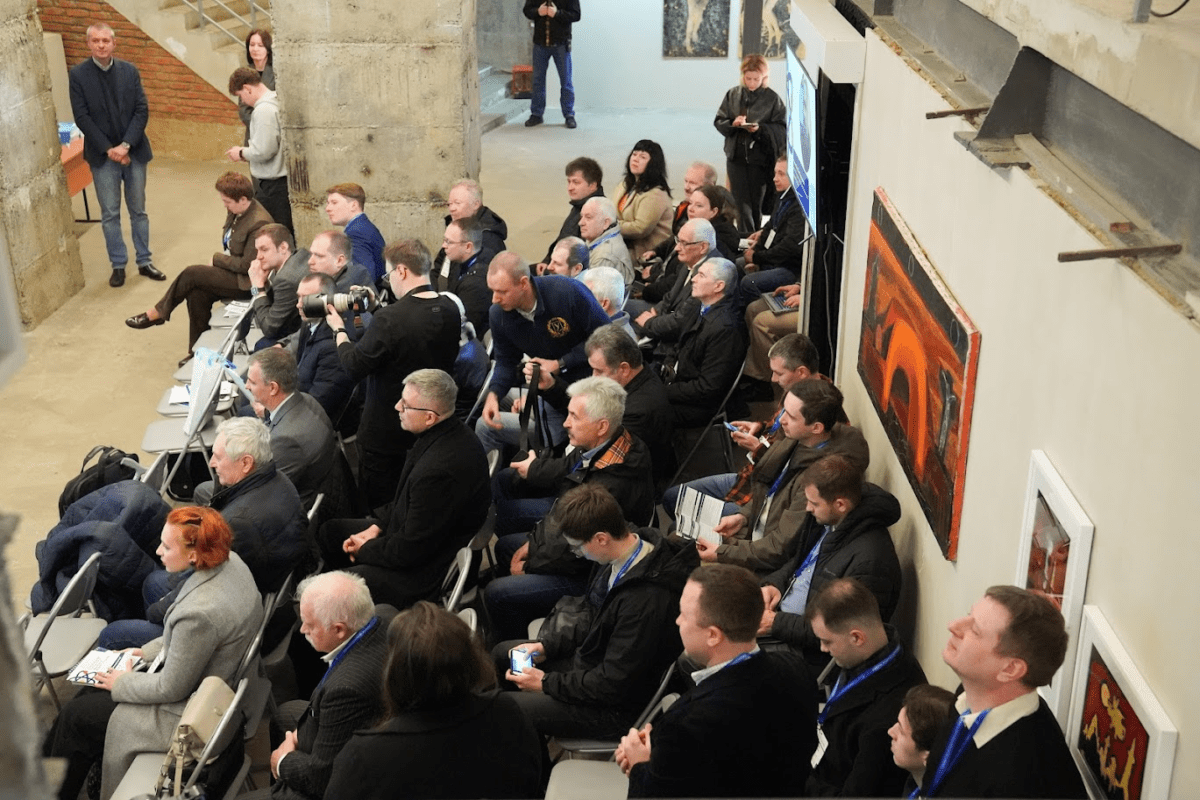
On 15 April 2026, the Information Day of the Euratom Programme in Ukraine took place in Kharkiv, organized within the framework of the III International Scientific and Technical Conference named after V.M. Voievodin “Problems of Modern Nuclear Energy”. The event was held in a hybrid format — online and offline at the YermilovCentre.
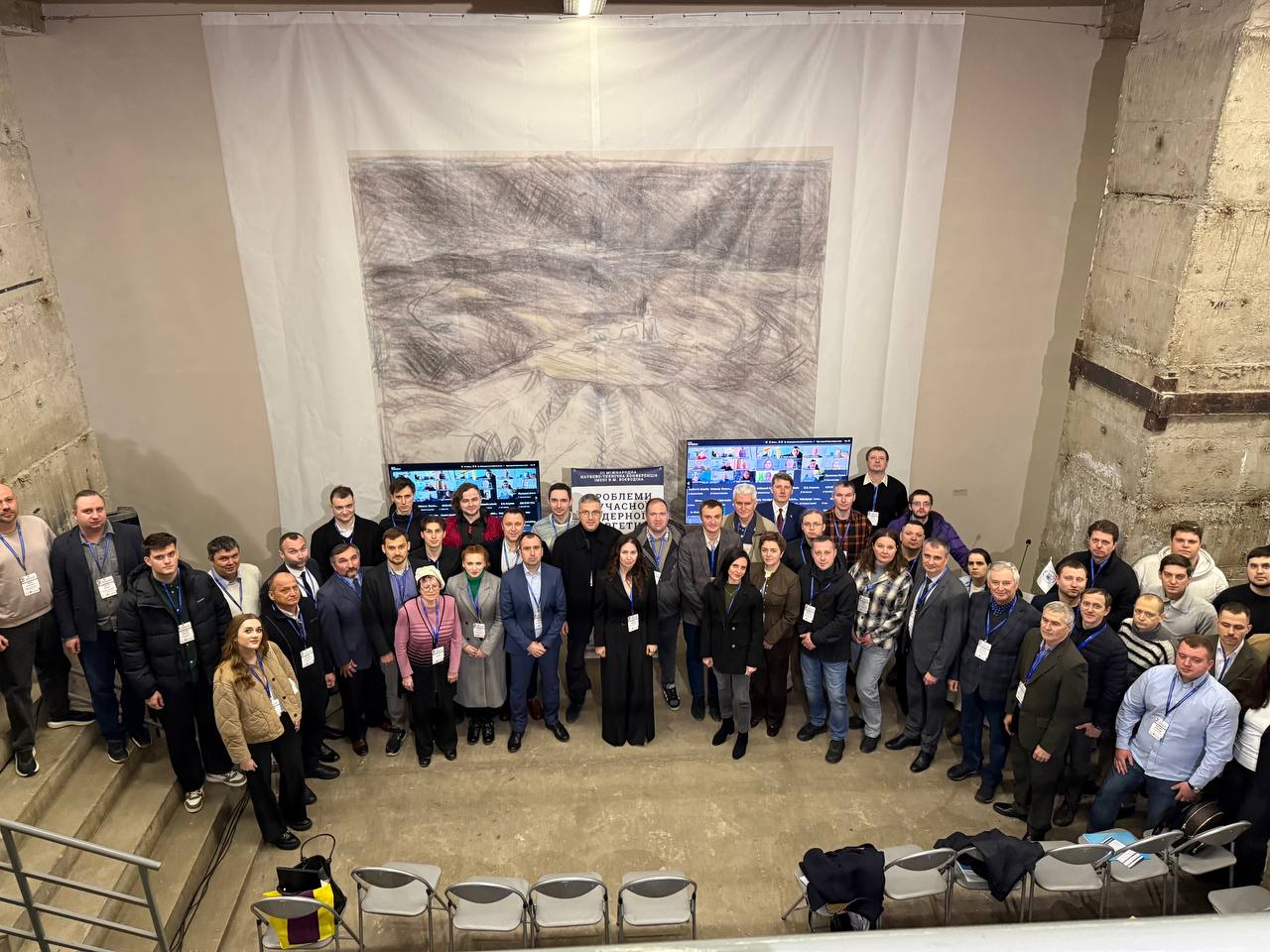
Approximately 30 participants attended the event onsite and 68 participants joined online, including researchers, lecturers, students, and representatives of Ukraine’s nuclear sector.
The Information Day programme covered current issues in the development of European nuclear science, education, and workforce capacity, as well as opportunities for Ukrainian specialists to participate in international initiatives under the Euratom Programme.
European Opportunities in Research and Education
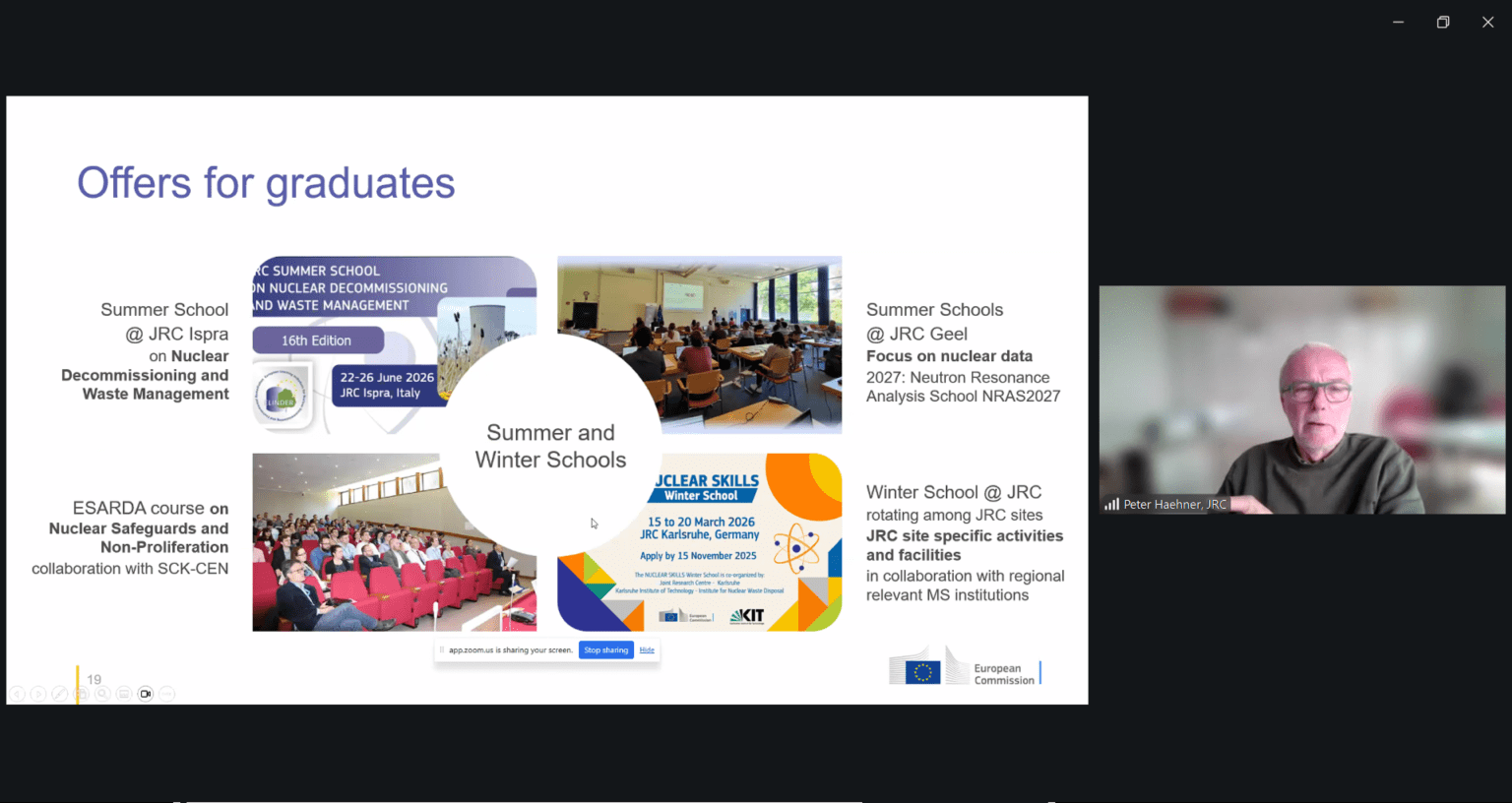
The first presentation was delivered by Peter Haehner (Senior Expert, Joint Research Centre, European Commission) entitled “JRC activities in training and R&D within Euratom”.
In his presentation, he introduced the structure of the Joint Research Centre (JRC), its main areas of activity, and the organization’s role in implementing the Horizon Europe and Euratom programmes. Particular attention was paid to the current 25 research areas of JRC and its activities within Euratom programmes.
The speaker outlined the JRC approach to skills development in the nuclear sector and presented educational and research initiatives. Physical research infrastructure facilities and opportunities for open access for external users were also introduced.
Development of Education in Nuclear Fusion
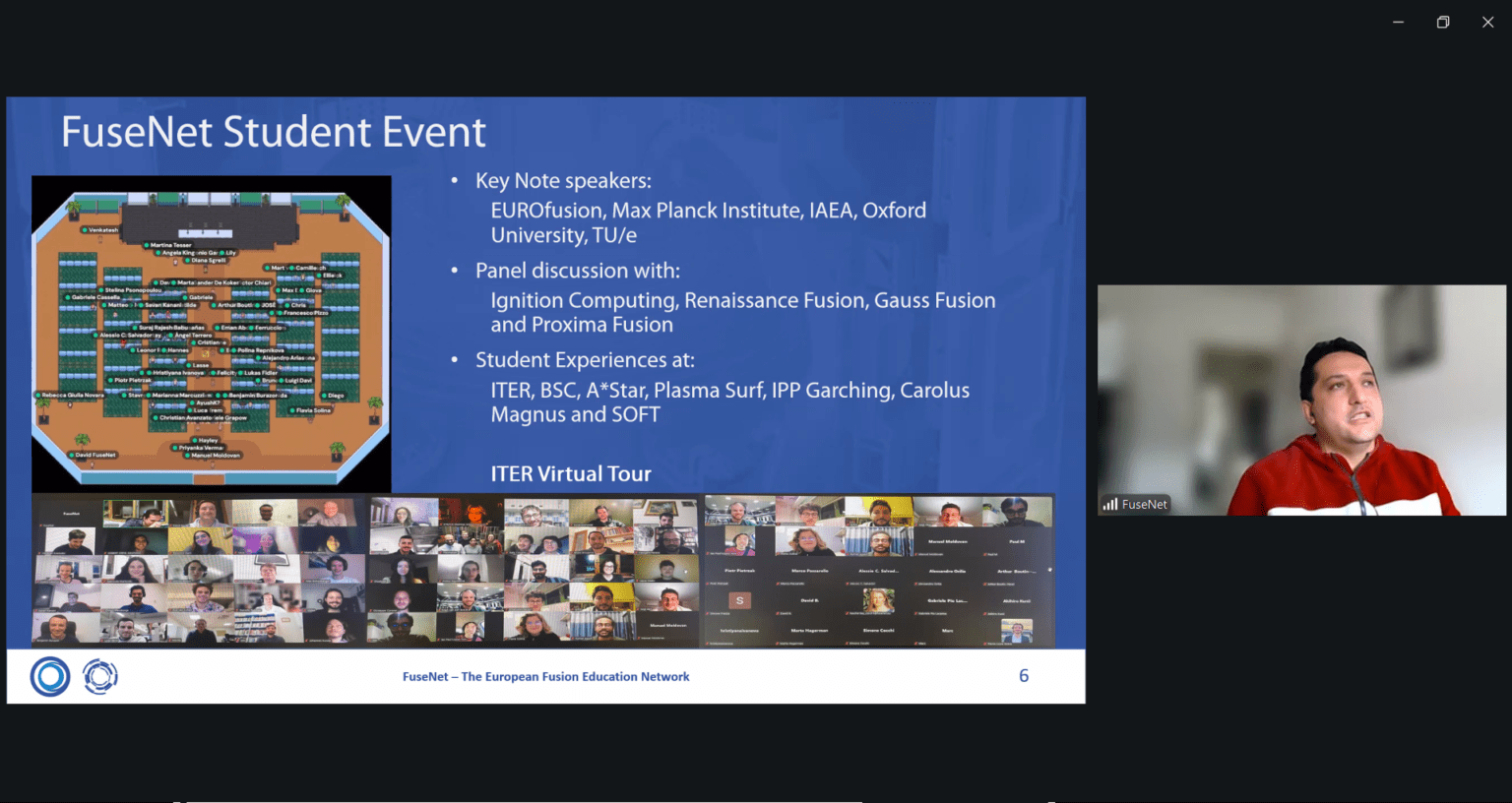
The second presentation was delivered by Cruz Darío Andrés (Executive Officer, FuseNet) entitled “FuseNet: Promoting fusion education and attracting young talent in Europe”.
During the presentation, the key educational initiatives of FuseNet aimed at promoting fusion research and attracting young people to the field were introduced. In particular, the FuseNet PhD Event, as well as the FuseNet Award for the Best Master’s Thesis and its 2023 winners, were presented.
Special attention was given to the FuseNet Student Event, its outcomes, and the FuseNet Teacher Day, which involved representatives from 29 European countries conducting local sessions.
Educational materials for secondary schools were also presented, including five modules on fusion topics, along with the FuseNet online platform that enables students and teachers to find current educational opportunities.
Building Europe’s Nuclear Workforce
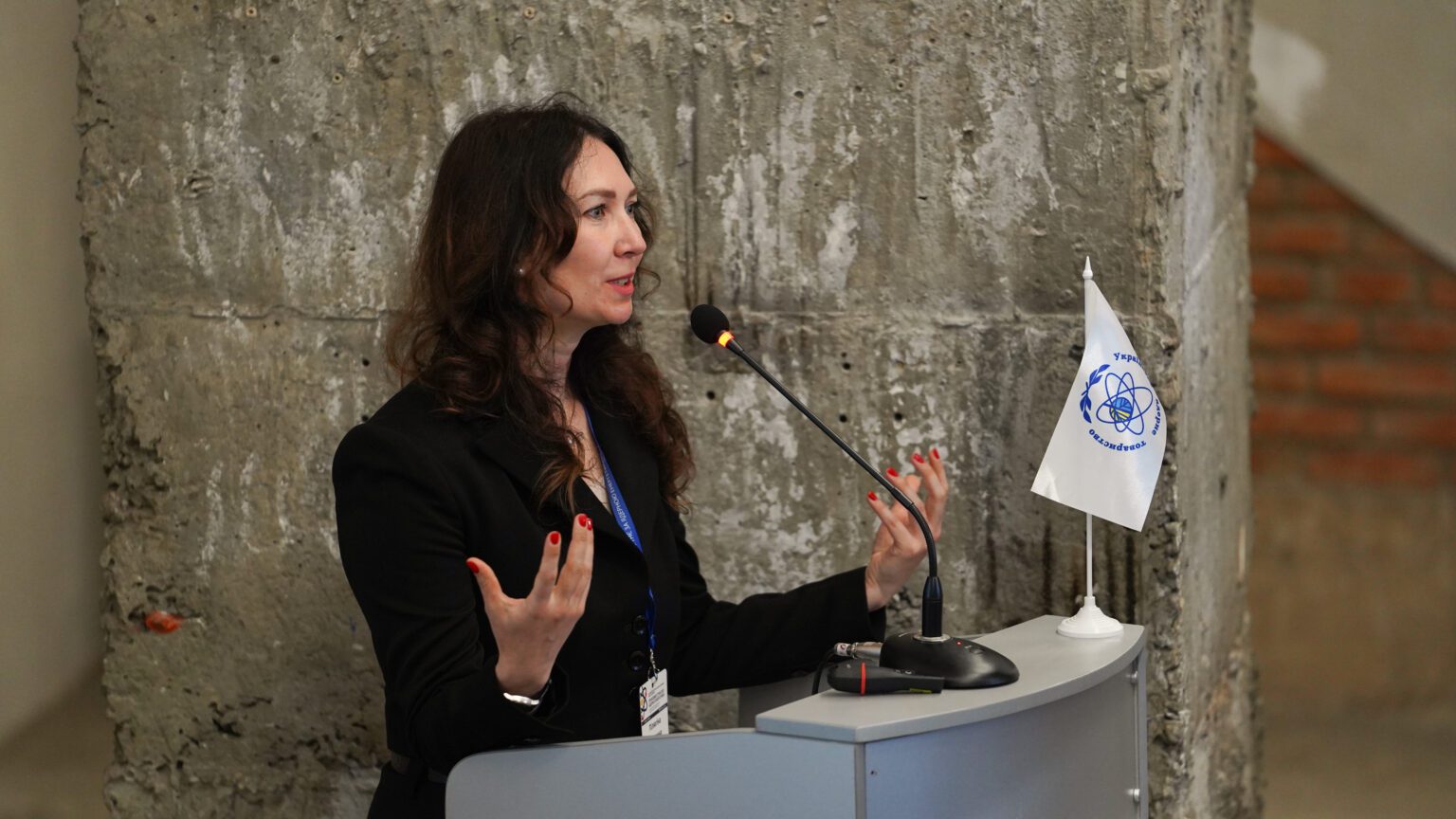
A presentation entitled “Building Europe’s Nuclear Workforce: closing the skills gap to accelerate deployment” was delivered by Kateryna Piliuhina (Programme Manager, European Nuclear Education Network).
In her presentation, she outlined the strategic goals of the European Union regarding energy decarbonization and explained why nuclear energy is currently at the center of European policy. The growing demand for qualified specialists and workers in the nuclear sector was emphasized, along with key workforce-related challenges.
The speaker presented the key activities of the European Nuclear Education Network (ENEN) and outlined prospects for Ukraine’s participation in building a modern nuclear workforce.
Activities of the Higher Scientific Council of the European Nuclear Society
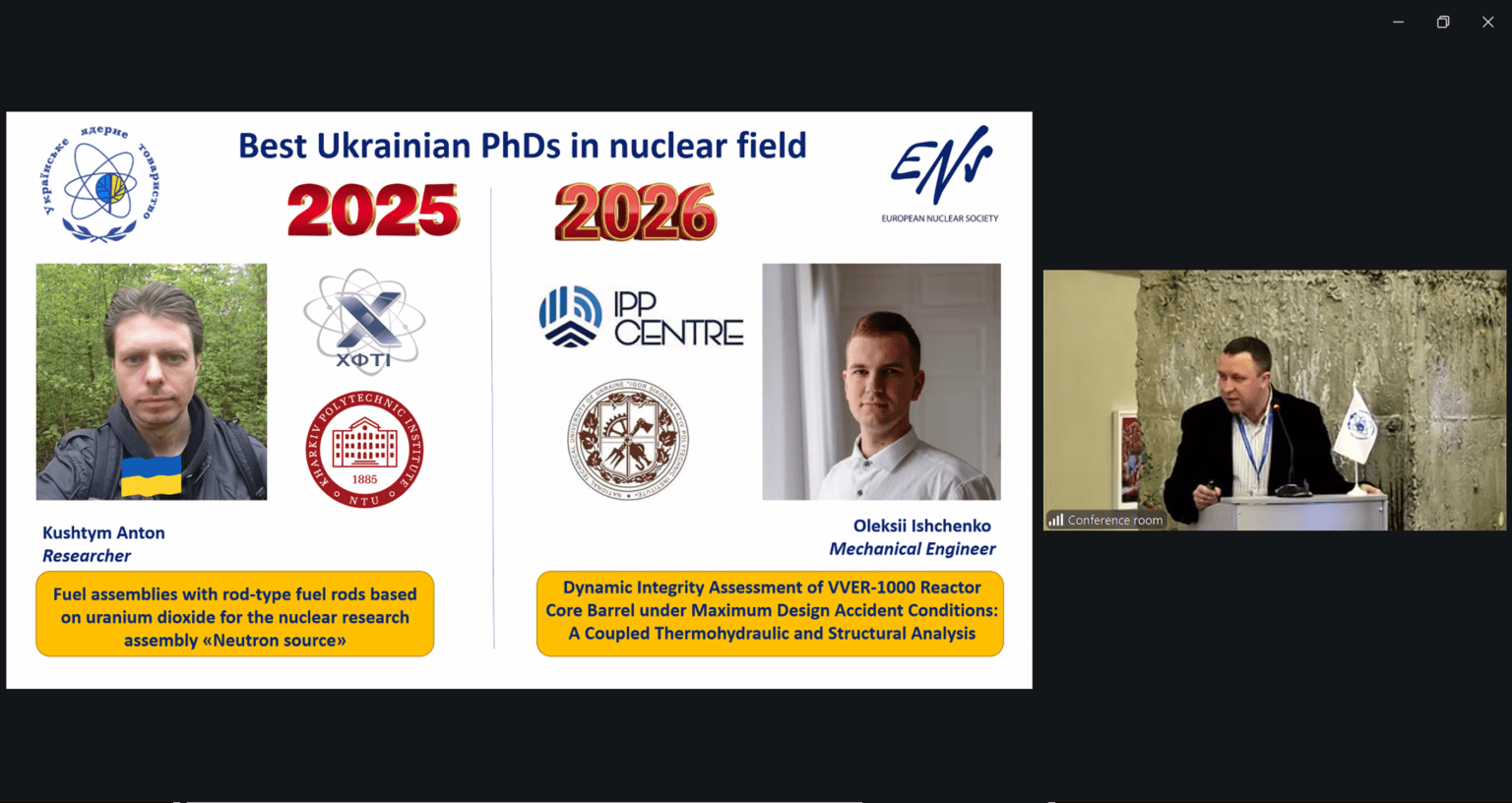
The next presentation was delivered by Pylyp Kuznietsov (Member of the Higher Scientific Council of the European Nuclear Society, V. N. Karazin Kharkiv National University) entitled “European Nuclear Society Higher Scientific Council activities and position papers”.
The presentation highlighted the activities of the Higher Scientific Council of the European Nuclear Society, its main tasks, and areas of work. Particular attention was given to the development of nuclear medicine and the potential of radiopharmaceuticals in Europe.
The HSC PhD Award competition was also presented, including previous winners, and the participation of Ukrainian researchers in this prestigious international competition was highlighted.
Prospects for Participation in Euratom Calls
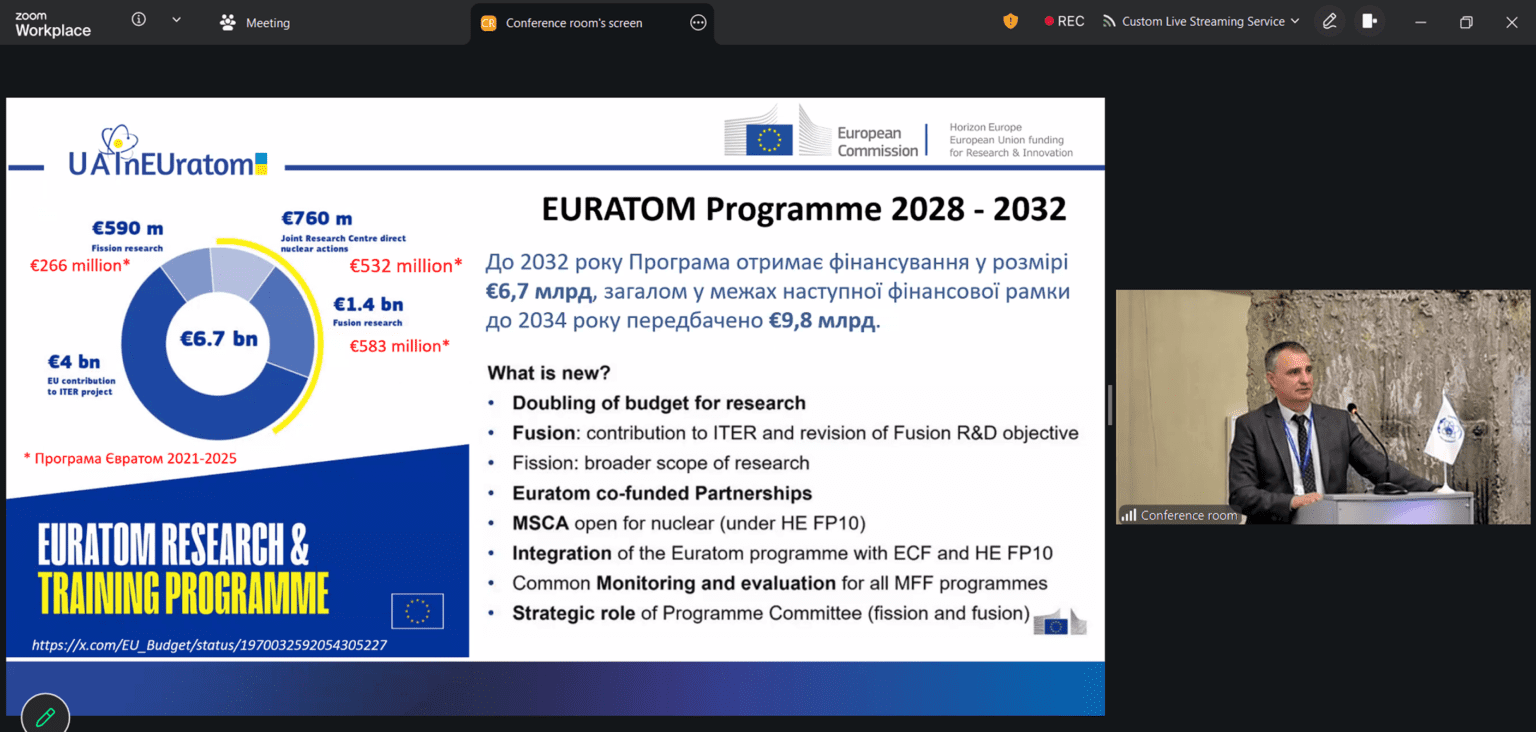
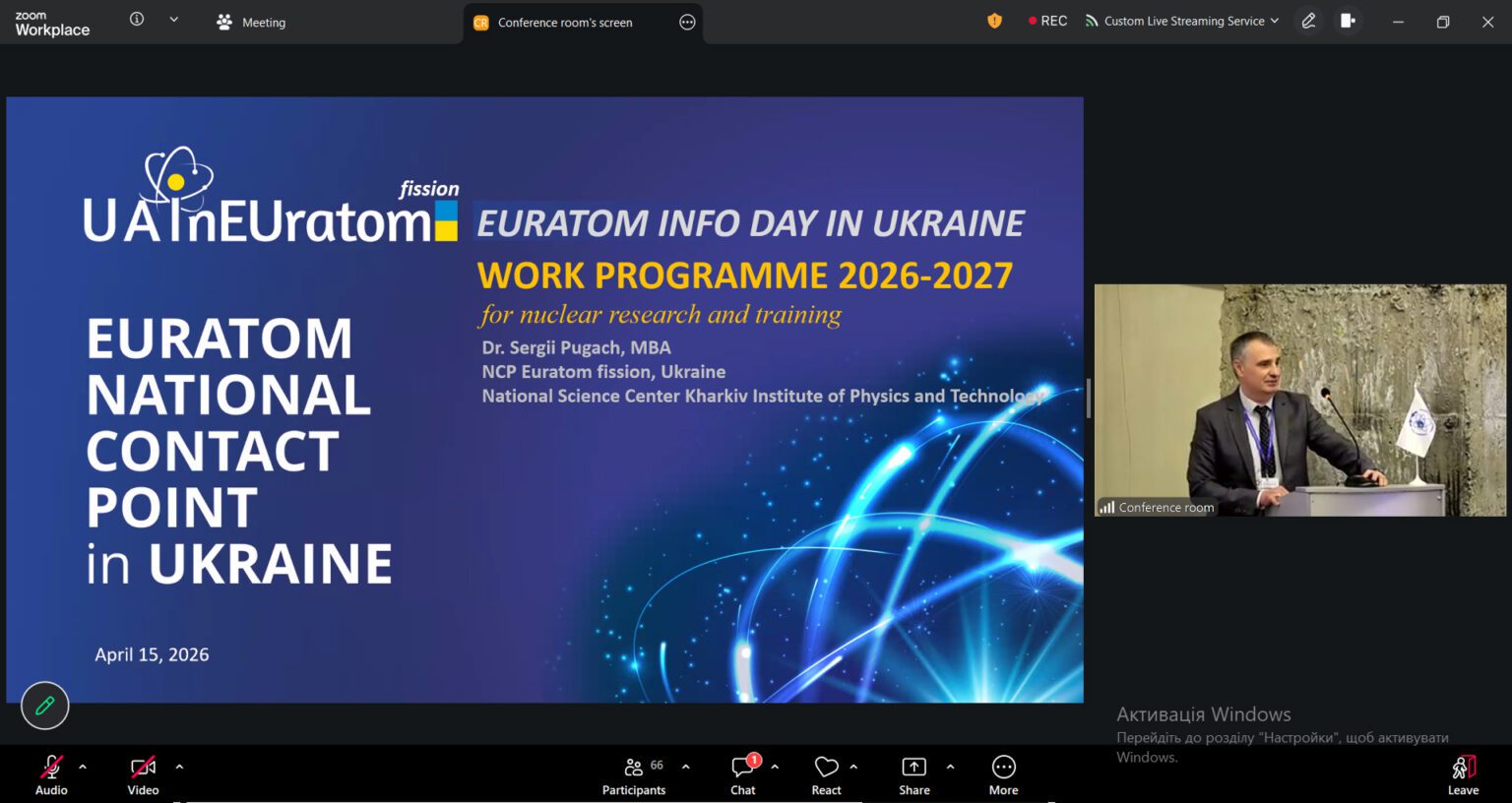
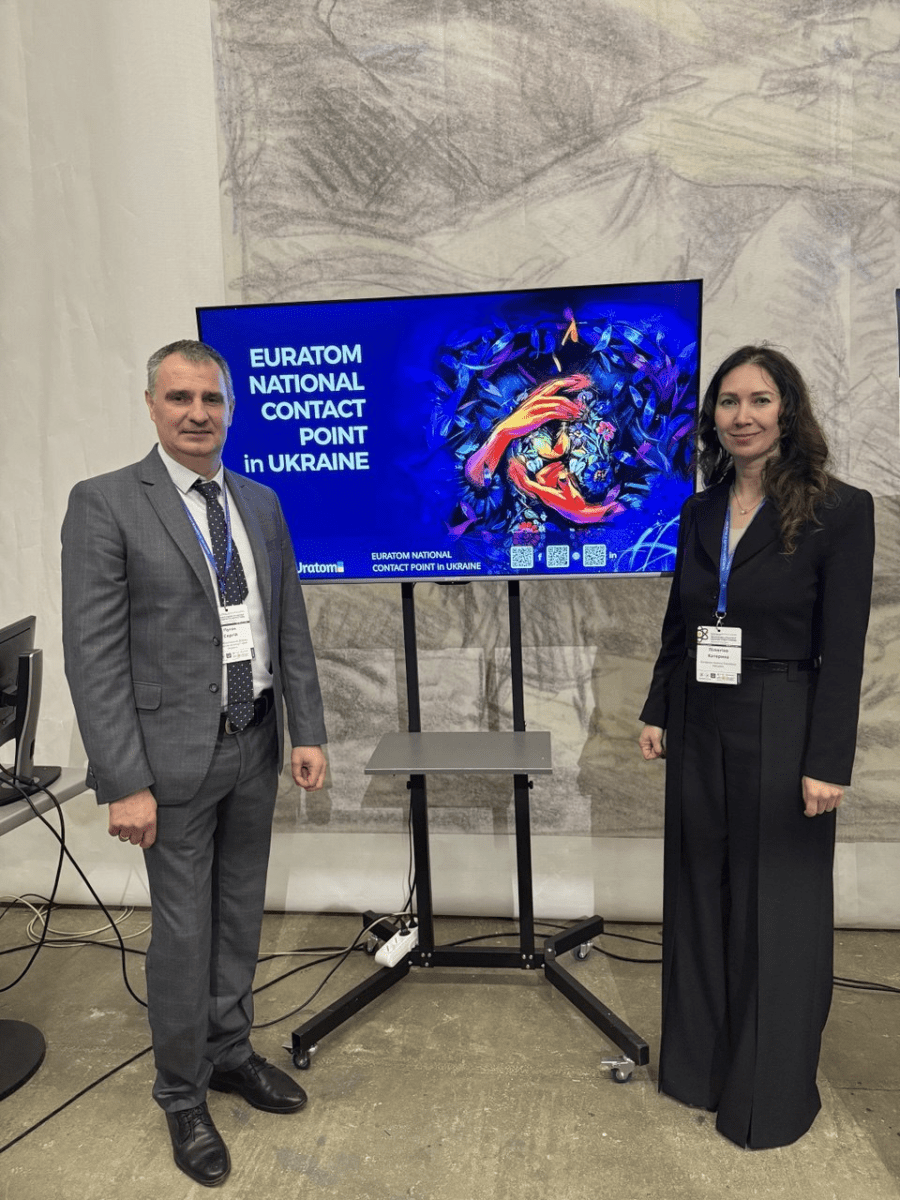
The final presentation was delivered by Sergii Pugach (Head of Euratom NCP in Ukraine (Fission), National Science Center Kharkiv Institute of Physics and Technology) entitled “Euratom Work Programme 2026–2027”.
The speaker provided participants with a detailed overview of the Euratom Work Programme 2026–2027, including current calls, thematic areas, budgets, and participation requirements. Preliminary proposals of the European Commission regarding future programmes Horizon Europe 2028–2034 and the Euratom Programme 2028–2032 were also presented.
During the presentation, the website of the Euratom National Contact Point in Ukraine was introduced, where information about open calls, international projects, and other opportunities for researchers is regularly published.
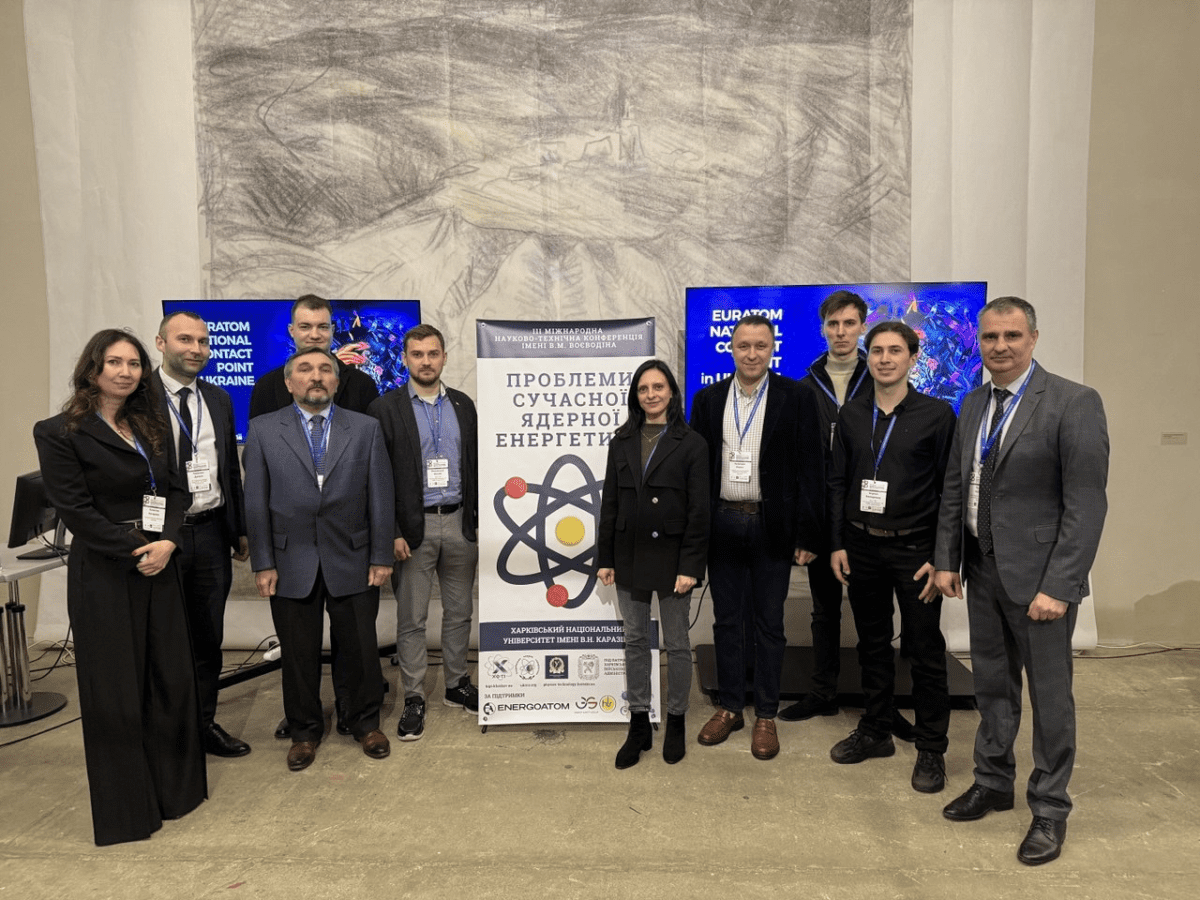
The Information Day of the Euratom Programme in Ukraine became an important platform for exchanging experience, presenting educational and scientific opportunities, and strengthening international cooperation.
The event contributed to increasing awareness among Ukrainian researchers, lecturers, and students about opportunities to participate in European research and educational initiatives, as well as to developing the human resource capacity of Ukraine’s nuclear sector in line with modern European requirements.
The NURECAB project (GA#101173510) is funded by the European Union within the framework of the Euratom Research and Training Programme (HORIZON EUROPE). The views and opinions expressed are those of the authors and do not necessarily reflect those of the European Commission.


