


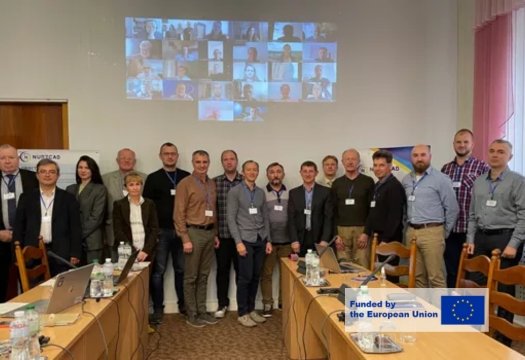
On 10 October 2024, 𝗧𝗵𝗲 𝟭𝘀𝘁 𝗡𝗨𝗥𝗘𝗖𝗔𝗕 𝗪𝗼𝗿𝗸𝘀𝗵𝗼𝗽 «𝗨𝗔 𝗮𝗻𝗱 𝗘𝗨 𝗡𝘂𝗰𝗹𝗲𝗮𝗿 𝗘𝗱𝘂𝗰𝗮𝘁𝗶𝗼𝗻 𝗧𝗿𝗲𝗻𝗱𝘀 𝗮𝗻𝗱 N𝘂𝗰𝗹𝗲𝗮𝗿 𝗜𝗻𝗱𝘂𝘀𝘁𝗿𝘆 𝗣𝗿𝗼𝘀𝗽𝗲𝗰𝘁𝘀» was held in Kyiv. The event was devoted to the current issues of nuclear education development in Ukraine and the needs of the nuclear sector of Ukraine to educational institutions.
The main purpose of the meeting was to discuss current trends in nuclear education, analyse the needs of the nuclear industry in Ukraine and the EU, and find ways to improve educational programmes to train highly qualified specialists in nuclear energy and medicine.
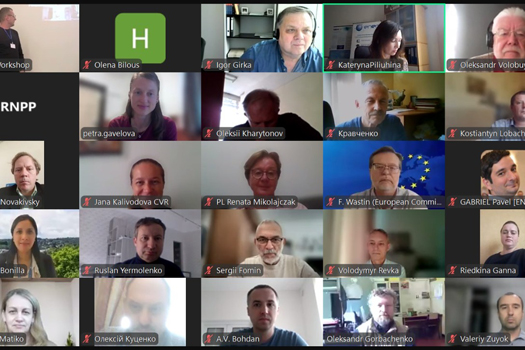
The participants included representatives of the European Network for Nuclear Education (ENEN), Ukrainian Nuclear Society, Spizhenko Clinic, the European Commission’s «Joint Support Office at Kyiv, for support to the management of INSC In Ukraine», the Nuclear Energy Agency (NEA), POLATOM Radioisotope Centre, CVR, JSC «NNEGC «Energoatom», as well as leading Ukrainian universities and research centres. A total of 92 representatives involved in the nuclear industry of Ukraine and Europe took part in the meeting.
The first part of the meeting was a presentation session aimed at obtaining information on the prospects of nuclear energy in Ukraine, the state of nuclear higher education in Ukraine, and the European experience in supporting nuclear education. The first session discussed issues related to specific areas of nuclear knowledge: materials science, nuclear medicine, radioactive waste management, etc.
The second part was a discussion based on a real-time survey of participants. Both the Ukrainian and European sides agreed that the most influential factor in the development of nuclear education and the relevance of its educational courses is the connection with the industrial component, both in the energy sector and with companies in non-energy applications.
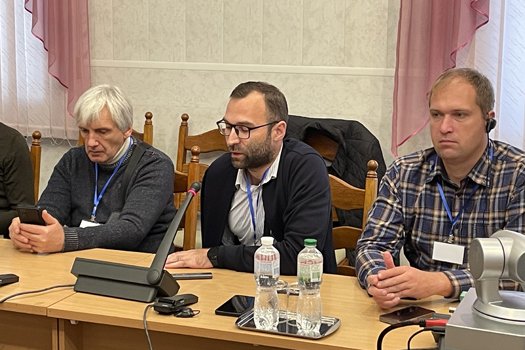
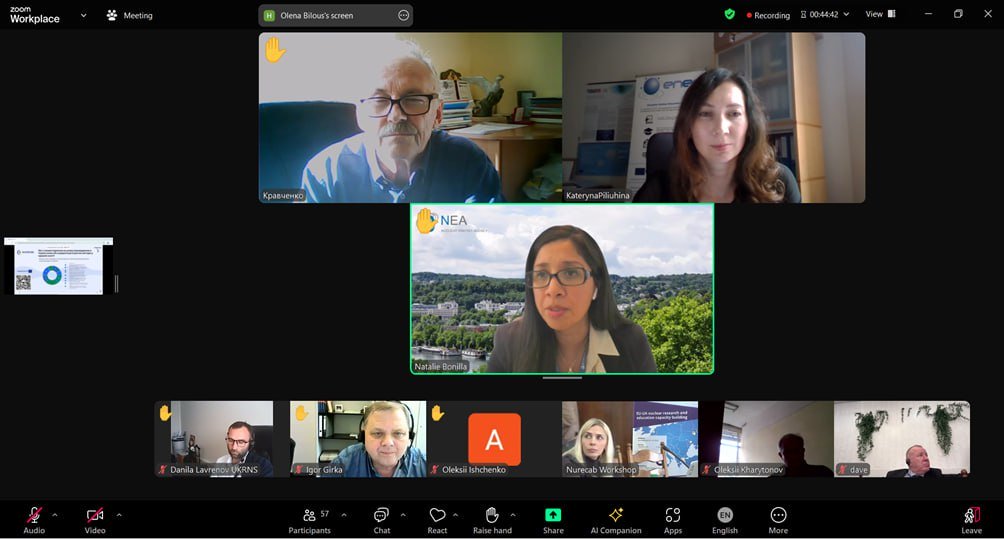
The nuclear sector requires knowledge in many areas, so it was difficult to identify specific topics for discussion. Nevertheless, the topic of nuclear medicine education in Ukraine was discussed in more detail, as a direct dialogue between education and clinical practice took place. Representatives of the Ministry of Health of Ukraine and the Ministry of Education and Science of Ukraine were not present in this dialogue. It was decided to organise a separate meeting to discuss the educational process in this area in more detail.
In order to combine most of the areas, it was decided to discuss existing best practices in the development of nuclear education, as well as barriers and solutions to overcome these barriers. It turned out that Ukrainian education uses almost all of the same practices as European colleagues. The difference is in the ability to apply these practices on a large scale.
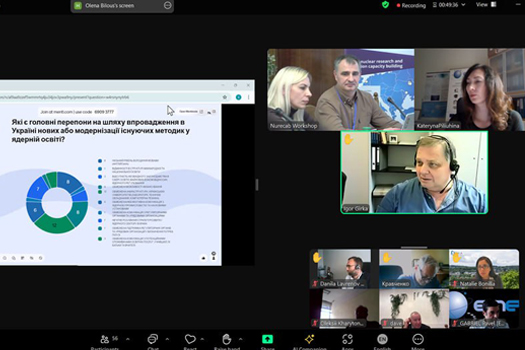
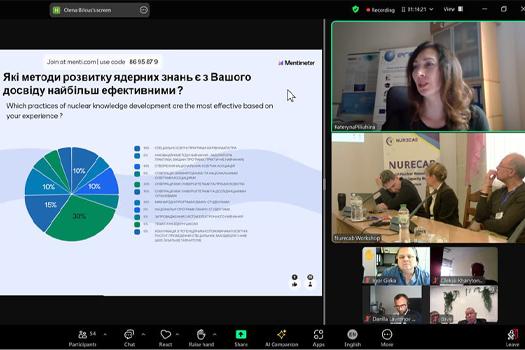
Among the barriers to development, three were the most painful: a small number of applicants to physics faculties, a low level of laboratory infrastructure, and legislative initiatives (attention from the authorities) to technical/natural specialties. What we have in common in terms of barriers with our European colleagues is the decline in interest among young generation to the natural sciences . Europe is making efforts, according to the estimates presented, 100,000 to 200,000 employees will be needed by 2035 to be involved in the nuclear industry. They need to be trained to provide green energy, where the nuclear component will be a significant part.
What solutions have been identified? Deeper integration of Ukrainian education into European nuclear education, which will be able to cover the problems in the short term with the lack of some courses and laboratory infrastructure. Developing involvement in the implementation of international grant projects, including educational area, aimed at creating new training programs and developing infrastructure in Ukraine. The basis for improving nuclear education in the long term is to change the existing attitude of the state policy towards higher nuclear education and to involve industrial companies of the nuclear sector in the educational process even more.
The materials of the workshop are available at the links below:
NURECAB project short presentation – Sergii Pugach
UA nuclear sector: JSO perspective – Dave Corbett
UA nuclear education overview (fission) – Volodymyr Kravchenko
Nuclear education in Europe – Natalie Bonilla
EU gap analyses in nuclear education&Labour needs of nuclear sector in EU – Gabriel Lazaro Pavel
Energoatom knowledge and labour needs – Dmytro Shamis, Mykola Kolesnyk, Oleksiy Kredenets
EU Nuclear waste management, decommissioning and dismantling – Franck Wastin
UA nuclear medicine overview, knowledge and labour needs – Ruslan Zelinsky
EU nuclear education: HU case study – Csilla Peznyak
Nuclear Medicine in Poland – Renata Mikolajczak
UA Materials science and engineering – Sergii Lytovchenko
EU Materials science and engineering – Petra Gávelová
The event was organized with the financial support of the NURECAB project.
The NURECAB project (“EU-UA Nuclear Research and Education Capacity Building”, GA#101173510) has received funding from the European Union under the EURATOM 2023-2025 work program.


