


On May 31, 2024, the event of the Euratom NCP in Ukraine – the Roundtable “Participation of Ukraine in the Euratom Programme. Work Programme 2023-2025”, which was the final part of the annual conference of the Institute of Nuclear Research of the National Academy of Sciences of Ukraine, was held.
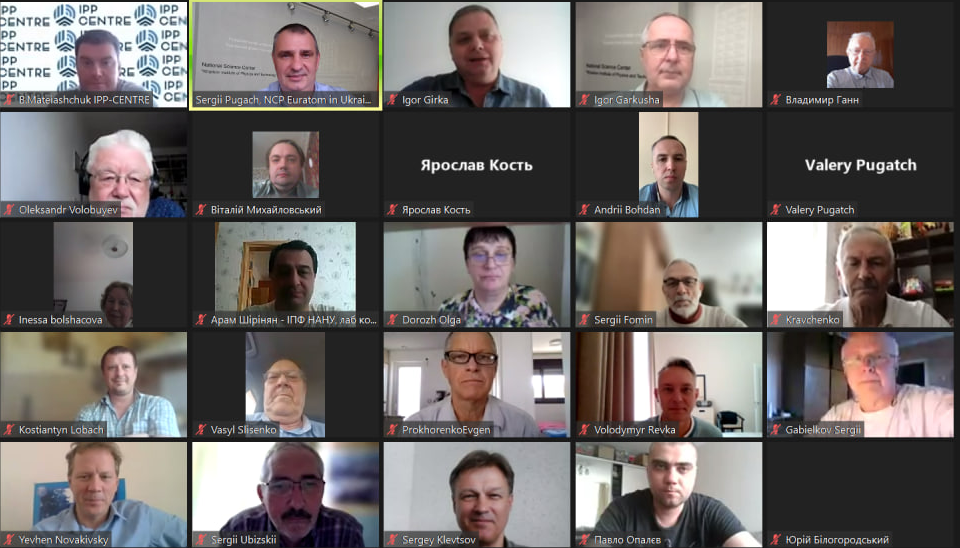
The Roundtable was jointly organized by the Euratom National Contact Point in Ukraine, the National Science Center “Kharkov Institute of Physics and Technology” and the Institute for Nuclear Research of the National Academy of Sciences of Ukraine. 57 representatives of research institutes, nuclear education institutions, industrial companies, the Horizon Europe Office in Ukraine, the Ministry of Education and Science of Ukraine and other parties interested in participating in the Euratom Programme were involved in this Roundtable.
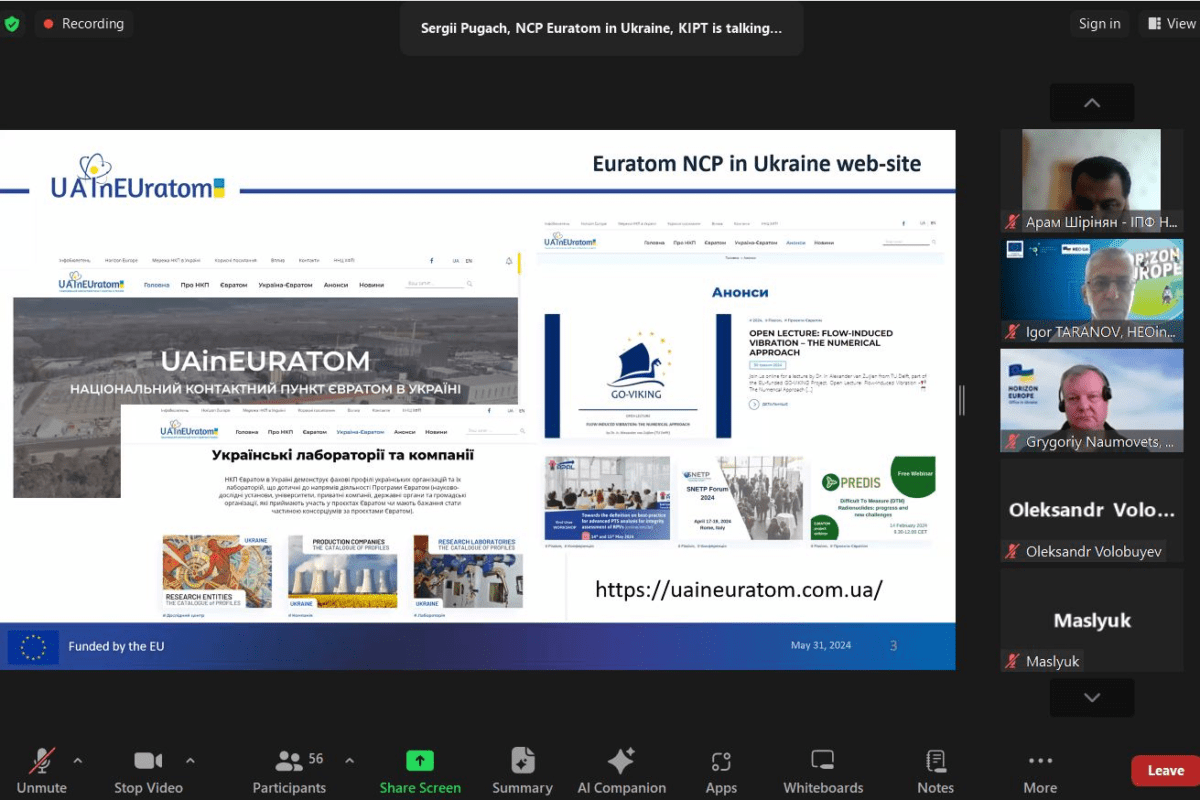
The Roundtable was opened by Vasyl Slisenko, Director of the Institute for Nuclear Research of the National Academy of Sciences of Ukraine, and Oleksandr Volobuiev, Head of the Euratom National Contact Point in Ukraine, Scientific Secretary of the National Science Center “Kharkov Institute of Physics and Technology”. General information on the Euratom Programme and activities of the Euratom National Contact Point in Ukraine over the past year was presented by Serhii Pugach, Deputy Head of the Euratom National Contact Point in Ukraine.
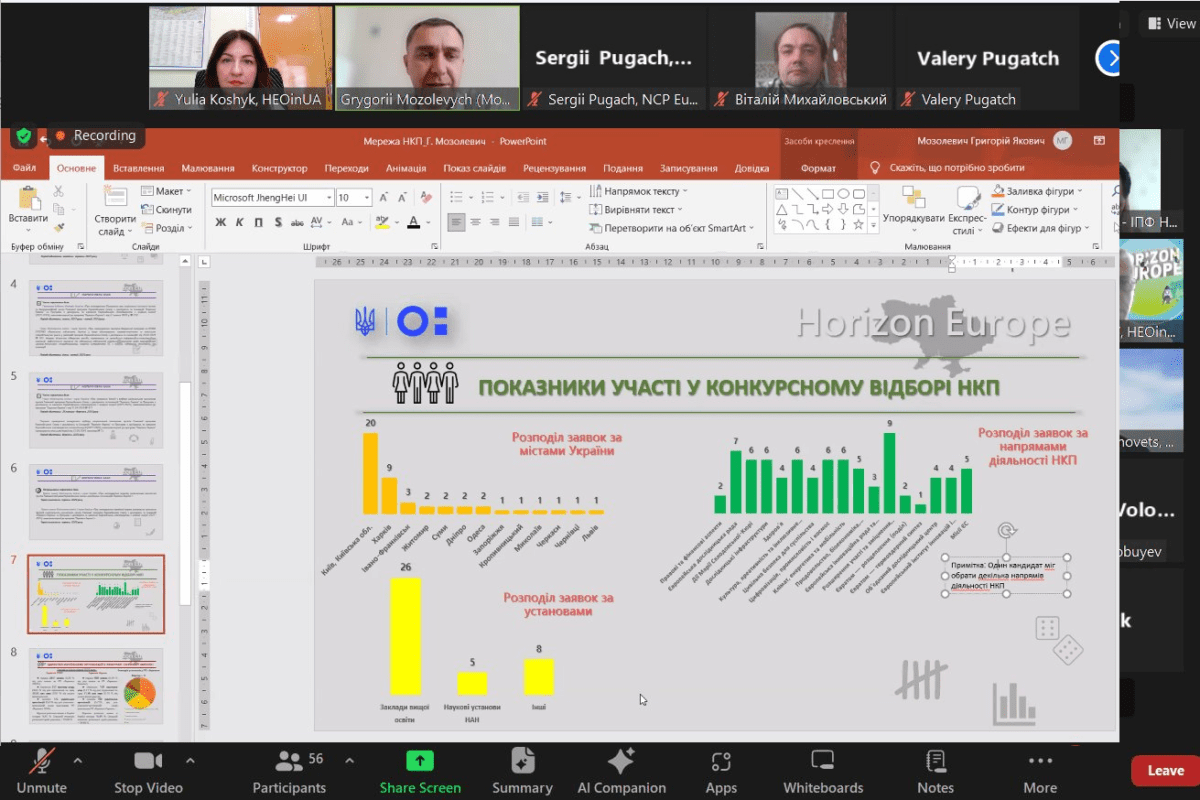
The Director General of the Science Development Directorate of the Ministry of Education and Science of Ukraine, Hryhory Mozolevych, reported on the status of the call for National Contact Points of the Horizon Europe Programme in Ukraine. The results and nominees of the NCPs of the Horizon Europe Programme are expected in the next 2-3 weeks. A total of 39 applications were received, 29 of which were submitted by institutions of Kyiv and Kharkiv. It was important to hear planned indicators of Ukraine’s participation in the Horizon Europe Programme, among them: every second scientist should have experience of participation (at least at the level of developing a project application together with partners), 100% of higher education institutions have experience in submitting applications, 75% of research institutes have experience in submitting applications, 75% of innovative enterprises are involved in the implementation of projects.
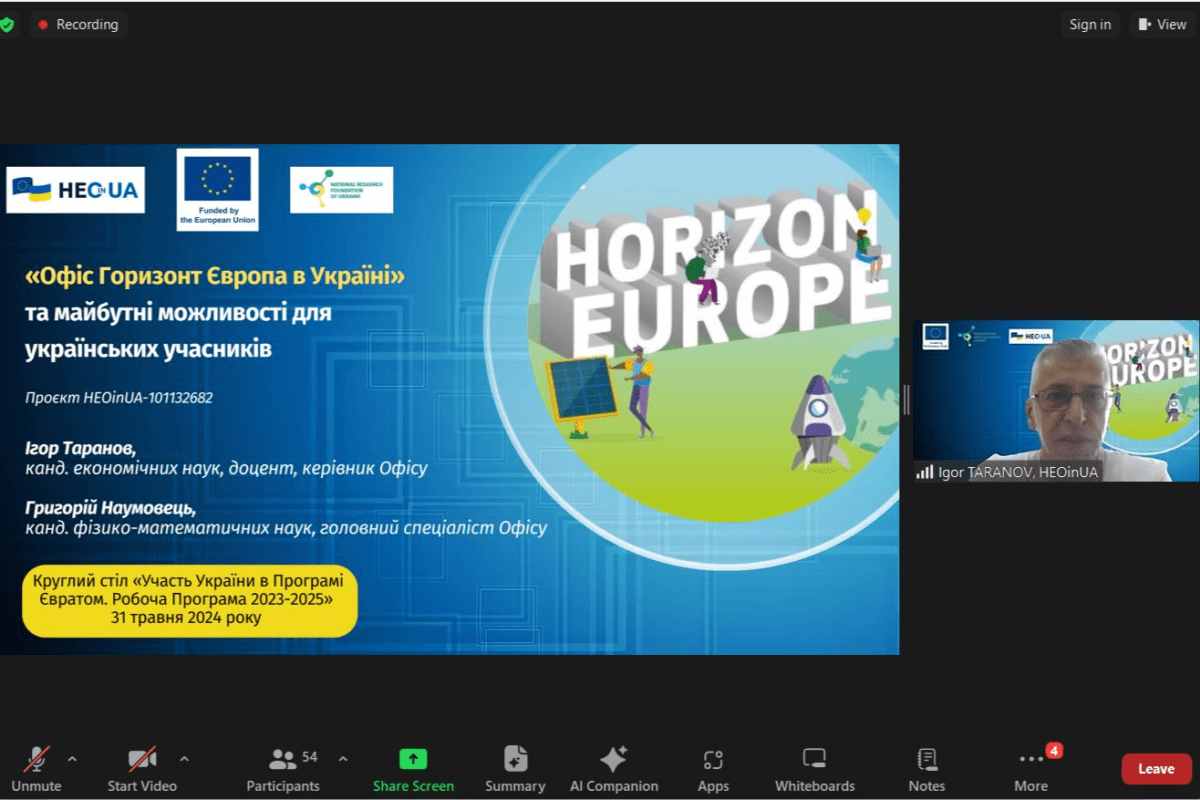
The next reports were made by the head of the “Horizon Europe Office in Ukraine”, Igor Taranov, and the chief specialist of the Office, Hryhoriy Naumovets. Ihor Taranov provided information on the activities of the “Horizon Europe Office in Ukraine”, the objectives, the target audience with which the Office works, measures to disseminate information about the Horizon Europe Programme, the Office’s advisory activities. Hryhoriy Naumovets provided information on the calls available in the current projects of the Euratom Programme and the calls related to awarding scientists and innovators in the fields of fission and fusion.
Serhii Pugach from the Euratom NCP in Ukraine reported on the results of participation in the Euratom Work Programme 2021-2022; Euratom Work Programme 2023-2024; opportunities for the development of cooperation available in the Partnership and Coordination and Support Action projects; steps to be taken into account when preparing for the next Work Programme 2026-2027. It was noted that at the mid-point of the Horizon Europe 2021-2027 Programme implementation Ukraine has already improved its participation in the Euratom Programme compared to the results of the Horizon 2020 Programme cycle. Under the current Euratom Programme Ukraine is involved in 19 projects, in which it has 42 participations with a total of the EU contribution of more than 7 million euros. During the cycle of the Horizon 2020 Programme Ukraine took part in 19 projects, in which it had 34 participations with a total EU contribution of 4.9 million euros. The average success rate of applications involving Ukraine under the Euratom Work Programme 2023-2025 is equal to 35.5%, which is significantly higher than the average success rate of proposals involving Ukraine in the Horizon Europe Programme (16.99%) and the overall average success rate in the Horizon Europe Programme (16.9%).
While discussing Ukraine’s integration into the Euratom Programme, the Roundtable participants raised a number of issues. To develop the integration of Ukrainian research the national Programmes at the level of the Ministry of Education and Science of Ukraine, the National Academy of Sciences of Ukraine and branch academies of sciences are needed, which are directed to supporting integration into the European Research Area. These are Programmes that will support successful research teams with experience in participating in EU Framework Programmes or teams that have solid plans for submitting applications that require additional meetings (in fact, Programmes to support research close to EU FP directions and to support communication for the development of scientific contacts and creation of project proposals). The issue regarding the call of the Ministry of Education and Science of Ukraine on “reimbursement” was relevant. Are there any plans for the next call? Will the Euratom Programme direction be included directly in the Regulations on the reimbursement call? The issue of the level of remuneration of Ukrainian scientists in the projects of the Framework Programme was also raised by the participants of the meeting. Ukraine has a significant gap in the level of remuneration of scientists compared to European countries. Reducing this gap would allow attracting more funding from the EU in Framework Programme projects where the main index of employment is the number of person-months. Other issues were raised during the Roundtable.
The Euratom National Contact Point in Ukraine expresses its gratitude to all participants of the meeting and speakers from the Science Development Directorate of the Ministry of Education and Science of Ukraine and the “Horizon Europe Office in Ukraine” for their efficient work. We hope for further strengthening of integration and increasing participation of Ukrainian scientific and innovative teams in projects of the Euratom Programme.
Special thanks to the co-organizers of the Roundtable “Participation of Ukraine in the Euratom Programme. Work Programme 2023-2025”, to representatives of the Department of Nuclear Physics and Power Engineering of the National Academy of Sciences of Ukraine, the National Research Center “Kharkov Institute of Physics and Technology” and the Institute for Nuclear Research of the National Academy of Sciences of Ukraine.
This event was prepared and held within the framework of the UAinEuratom21 project. The UAinEuratom21 project received funding from the European Union under the Euratom Research and Training Programme (Horizon Europe), Grant Agreement No. 101072693


